Figure (taxo): Sorcière

  • Geographic Enchantments: The Trickster and Crone in Contemporary Fairy Tales and Storytelling

    Cette fiche apparait à la fois dans la figure du Trickster et de la Sorcière.

    « Fairy tales are enchanting geographical stories, which affectively organize space-time in socially, politically, and ethically significant ways. Despite this, fairy tales have been neglected in the discipline of geography, and the inter-discipline of fairy tale studies has rarely interrogated the spatialities of tales, or of storytelling more widely. This thesis addresses this lacuna by theorizing the relationship between fairy tales, storytelling, and geography through the subversive folkloric figures of the trickster and crone. It posits, first, that we understand fairy tales as iterative stories that constitute mythic communities; and second, that trickster and crone figures are enchanting territorializing and deterritorializing refrains that subvert this mythic community. These two concerns are explored through Nolan’s (2008) Batman film The Dark Knight, and Maitland’s (2009) short story Moss Witch. An experimental research approach provides insight into these ‘worldly,’ enchanting, and symbolically rich stories, without sacrificing their liveliness or ‘systematizing’ them for ideological gain. The research begins with an interpretive textual analysis to address the symbolic traditions of the fairy tale refrains. Collage enables a ‘retelling’ of the stories as materially and visually expressive media. Genealogical analysis traces the material-discursive matterings of the geographical refrains within academic ‘storytelling.’ These combined approaches ‘story’ the trickster and crone as spatial patterns with affective force. Trickster refrains are animating forces of destruction and chaos. They shift between the centre and periphery of mythic community, violently overturn its seemingly ordered realities, and unfold insecure and profane in-between places, where (human) community can no longer be sustained. The crone refrain enacts a ‘wilding’ in fairy tales, entangling the civilized, storied human polis (or culture more generally) with the nonhuman ‘environment,’ and undermining both relational accounts of being and more romantic discourses of dwelling. Going forward, continued engagement with this nexus of geography, storytelling, and fairy tales promises to enrich our multidisciplinary endeavours, highlight our theoretical ‘matterings’ of fairy tales, and enable more responsible engagement with these endlessly enchanting stories. » (Résumé)
  • Tricksters, Witches, and Warriors : a Feminist Experiment in Rewriting a Patriarchal Narrative in Children’s Fantasy Literature

    Cette fiche apparait dans la figure du Trickster et de la Sorcière.

    « In this thesis, I identify and analyze mechanisms of patriarchal bias in children’s fantasy literature primarily through the lens of under-represented female tricksters, examining existing literature to reveal ideologies and semiotics that reinforce patriarchal normativity according to limited archetypal representation. Through this study, three insights became clear. First, there are few identified female tricksters in various world mythologies; however, when applying trickster characteristics to mythological archetypes, it becomes evident that there are plenty of female tricksters who are identified by another label: “witch.” I examine the impact this negative stereotype plays on feminine representation of otherwise beloved tricksters, especially within children’s literature. Second, I describe ongoing efforts to unweave patriarchal biases in so-called feminist texts via the trickster archetype, pointing out a common overcorrection through the use of women warriors- women who are stronger and more powerful than men within their patriarchal environments, who create unrealistic expectations for female agency. Third, I point out that by placing women warriors within hegemonic systems, these stories reinforce patriarchal normativity rather than mitigate the suppositions of male superiority, as intended. Therefore, this paper aims to bring new perspective to the negative tropes we employ in our writings for children’s fantasy and suggest the use of more appropriately labeled and embodied female tricksters to help unweave embedded patriarchal biases. I also conduct an experiment to employ my theories by example in the craft application portion of my study-a feminist fantasy novel called Two Lies and a Truth. » (Résumé)

  • Études de mythologie grecque : Ulysse et Circé. Les Sirènes

    Cette fiche apparait dans la figure de la Sirène et de la Sorcière.

    L’essai de Cerquand s’intéresse aux figures de la mythologie grecque – dieux, déesses, monstres, etc. – ainsi qu’à leurs représentations dans les œuvres littéraires contemporaines. L’ouvrage a été réédité à maintes reprises, dans son entiereté, mais aussi divisé par thématiques (par exemple : Les sirènes, Librairie Lacour, 1993.)

  • A mythopoesis of silenced voices: Women, goddesses, and female monsters in the “Odyssey”

    Cette fiche apparait dans la figure de la Sirène et de la Sorcière.

    « Homer’s Odyssey draws upon a rich heritage of ancient oral narratives from the Aegean world and beyond. Most if not all the poem’s characters existed in multiple versions of such oral narratives long before the Odyssey as we know it came into being. These narratives as well as their characters have been radically reshaped and edited over many centuries of cultural change prior to, during, and after the work of the Homeric poet(s) and the gradual imposition of the mythic Olympian hierarchy with its dominant patriarchal standards and influences on religious perspectives, politics, society, and sexuality.

    Focus on selected mortal women, goddesses, and female monsters, specifically Penelope, Helen, Calypso, Circe, the Sirens, Scylla, Charybdis, and Athene, demonstrates how female characters as depicted in the Odyssey have been radically altered to effectively silence them as speakers in their own behalf rather than as reflections of and within the new world order. This study proceeds from research into ancient non-Homeric writers for evidence of variant traditions known to but not always employed by Homer in creating his epic poem, as well as into scholarly and critical assessments of them and into pertinent materials from archaeology, religion, and other cultural disciplines. Additionally, the study brings together literary treatments of these characters, with an emphasis on more recent poetry in which they narrate their own stories.

    All of these materials serve as prolegomena to a series of poems that allow each character to sing forward a particular portion of her ancient mythic tradition that until now has not been treated. » (Résumé)

  • Landscapes of the Witches’ Sabbath: Space, Place, and Fantasy in Early Modern Europe, 1500-1750

    Cette fiche apparait dans la figure de la Sorcière et du Diable.

    « Amidst the early modern European witch craze, fantasies of the witches’ sabbath spread across the continent, spurred by the terrors and anxieties of people across the social strata. Believed to be the gathering of diabolic witches who would worship the Devil, feast, dance, and engage in demonic orgies, the sabbath inverted early modern customs and rites to play a central role in witchcraft belief. While the belief in the sabbath may seem rooted in fantasy, those constructing the sabbath narratives needed to place their stories in a real setting to make them believable. This thesis explores the landscapes associated with the witches’ sabbath across early modern Europe, using these spaces and narratives to understand the relationship between people and landscape over time. Delving into the mentalités of common people and learned demonologists alike, this thesis explores the landscapes of the sabbath from Portugal to Poland to uncover how different cultural and geographic contexts moulded the sabbath belief to fit their local landscape. » (Extrait du résumé)

  • Oedipus and the Devil. Witchcraft, Religion and Sexuality in Early Modern Europe

    Cette fiche apparait dans la figure de la Sorcière et du Diable.

    « This bold and imaginative book marks out a different route towards understanding the body, and its relationship to culture and subjectivity. Amongst other subjects, Lyndal Roper deals with the nature of masculinity and feminity. » (Résumé de l’éditeur)

  • Witchcraft in the Middle Ages

    « All the known theories and incidents of witchcraft in Western Europe from the fifth to the fifteenth century are brilliantly set forth in this engaging and comprehensive history.

    Building on a foundation of newly discovered primary sources and recent secondary interpretations, Professor Russell first establishes the facts and then explains the phenomenon of witchcraft in terms of its social and religious environment, particularly in relation to medieval heresies. He treats European witchcraft as a product of Christianity, grounded in heresy more than in the magic and sorcery that have existed in other societies. Skillfully blending narration with analysis, he shows how social and religious changes nourished the spread of witchcraft until large portions of medieval Europe were in its grip?”from the most illiterate peasant to the most skilled philosopher or scientist.” » (Résumé)

  • History of Witchcraft, Sorcerers, Heretics, and Pagans

    « Witchcraft has always been a fluid and intriguing belief system that has enchanted and sometimes terrified humanity. For over forty years, A History of Witchcraft has provided the authoritative history of witchery and the occult. Beginning with magic in the ancient world, Jeffrey Russell explores the definition of witchcraft in its many diverse forms, from the worship of the Greek goddess of magic, Hecate, through the witch-crazes of the 15th and 16th centuries to the development of modern witchcraft by Aleister Crowley and Gerald Gardner in the early 20th century. » (Résumé)

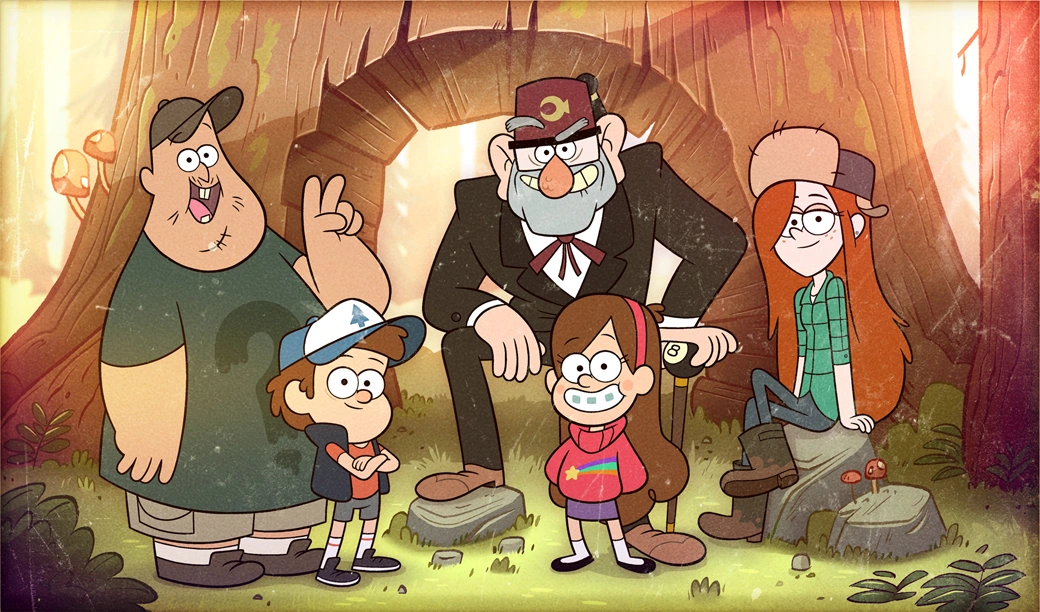
  • Gravity Falls

    Gravity Falls

    Cette fiche apparaît dans les figures du Zombie, du Pirate, de l’Extraterrestre, de la Sorcière, de la Sirène et du Trickster.

    « Souvenirs de Gravity Falls (Gravity Falls) est une série télévisée d’animation américaine en quarante et un épisodes d’environ 22 minutes créée par Alex Hirsch diffusée entre le 15 juin 2012[1] et le 15 février 2016 sur Disney Channel et Disney XD, ainsi que sur Family Channel au Canada » (Souvenirs de Gravity Falls sur Wikipedia). La série suit les aventures des jumeaux Mabel et Dipper Pines lors d’un été chez leur grand-oncle Stan.

    La série inclut bon nombre de créatures fantastiques et de phénomènes surnaturels et paranomaux.

    Trickster :

    La ville de Gravity Falls aime tant la fête d’Halloween qu’elle la fête aussi en été. La légende veut que durant la fête de Summerween, un Trickster apparait pour punir les enfants qui n’adoptent pas assez l’esprit de la fête. Lorsque Dipper tente d’impressionner Wendy, plus vieille que lui, en refusant de passer ramasser des bonbons avec sa soeur, ceux-ci sont pourchassés par le Summerween Trickster (Saison 1, épisode 12, « Summerween »).

    L’antagoniste ultime de la série, un démon triangulaire du monde des rêves nommé Bill Cypher, possède plusieurs caractéristiques associés à la figure du trickster. Il est maître de la tromperie et de l’illusion, se faisant passer pour un guide ou une muse afin de prendre possession de ses victimes (Saison 1, épisode 19, « Dreamscaperers » ; saison 2, épisode 4, « Sock Opera » ; saison 2, épisode 17, « Dipper and Mabel vs. the Future » ; saison 2, épisode 18, « Weirdmaggedon part 1) ; saison 2, épisode 19, « Weirdmaggedon 2: Escape from Reality »; saison 2, épisode 20, « Weirdmageddon 3: Take Back the Falls »).

    Sirène :

    Mabel Pines découvre qu’un mytérieux inconnu dans la piscine municipale de Gravity Fall est un homme-sirène nommé Mermando qui y a été piégé par accident. Un épisode lui est dédié lors de la première saison, alors que Mabel tente de le libérer (Saison 1, épisode 15, « The Deep End »).

    Zombie :

    Durant le premier épisode, Mabel Pines tombe amoureuse d’un inconnu et son comportement étrange pousse Dipper à croire qu’il s’agirait d’un zombie. Ceux-ci découvrent ultimement qu’il s’agit de plusieurs gnomes cachés sous les vêtements (Saison 1, épisode 1, « Tourist Trapped »). De plus, lors d’une fête, Dipper Pines réanime une horde de mort-vivant pour prouver à des agents gouvernementaux que des événements surnaturels se déroulent à Gravity Falls (Saison 2, épisode 1, « Scary-oke »).

    Pirate :

    Alors que Mabel Pines affronte son ennemie, Pacifica Northwest, dans une partie de mini-golf, une faction de créature nommées les Lilliputtiens vivant dans le mini-golf représentent des pirates (Saison 2, épisode 3, « The Golf War »).

    Sorcière :

    Lorsque leur grand-oncle Stan vole une montre à une femme au marché aux puces, celle-ci semble maudire le kleptomane. Le lendemain, Stan se réveille pour découvrir que ses mains ont disparus. Stan, Dipper et Mabel voyagent alors dans la montage pour convaincre la « Hand Witch » (la sorcière des mains) de redonner à Stan l’usage de ses mains (Saison 2, épisode 6, « Little Gift Shop of Horrors »).

    Extraterrestre :

    Vers la fin de la série, on apprend que Gravity Falls a été construite sur le site du crash d’un vaisseau extraterrestre (Saison 2, épisode 17, « Dipper and Mabel vs. the Future »).

  • Stardew Valley

    Stardew Valley

    Cette fiche apparait dans les figures du Pirate, de la Sirène et de la Sorcière.

    « Stardew Valley est un jeu vidéo type RPG dans lequel le joueur doit gérer la ferme de son grand-père décédé dans un endroit connu sous le nom de Stardew Valley. Il a été développé par Eric Barone et édité par Chucklefish Games. » (Stardew Valley sur Wikipédia)

    L’univers de Stardew Valley abrite plusieurs personnage fantastiques qui font leur apparition. Durant le Night Market, le.a joueur.euse peut visiter un spectacle qui met en scène une performance de sirène. Sur Ginger Island, résoudre le puzzle de la Sirène un jour de pluie donne accès à la caverne des Pirates. Aussi sur Ginger Island, la femme du Pirate peut nous donner une quête à accomplir.

    Il y a aussi une sorcière qui se promène durant la nuit sur son balais qui dépose un Void Egg si un poulailler a été construit sur la ferme. Nous apprenons au fil de l’histoire que cette sorcière est l’ex-femme du magicien Rasmodius qui nous offre l’occasion de visiter sa hutte. Cette sorcière a la peau verte ainsi qu’une robe et un chapeau pointu noir. L’entrée de sa caverne est gardée par une petite hutte sur patte, qui rappelle le logis de Baba Yaga.