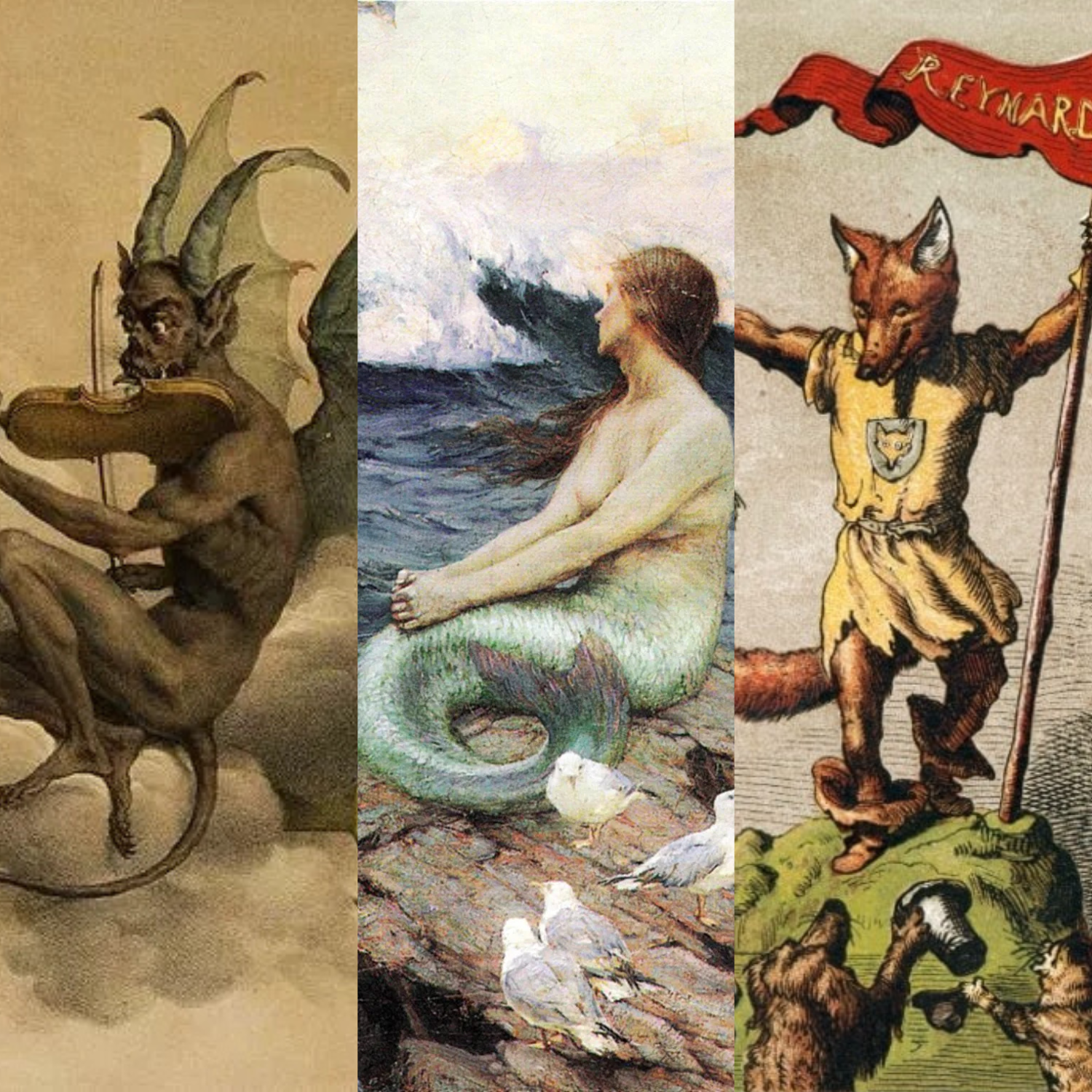
Trois nouvelles figures pop sont désormais disponibles sur le site de Pop-en-stock! Figures de séduction, de tromperie et de savoirs, le Diable, la Sirène et le Trickster ont une longue histoire à découvrir dès maintenant.
Merci à toustes nos collaborateurices qui ont travaillé sur ces figures au printemps dernier!
Enfin, après deux ans de durs labeurs, voici, gratuit et en ligne, le volume collectif POUR UN NOUVEAU COMPARATISME!
Faites diffuser et amusez vous dans les méandres d’une discipline qui restera toujours une invitation aux voyages les plus surprenants… Du cyberpunk à Felix le Chat, Bataille, Borges, Fante, Scumfuc Outlaw Christ, les comics ou la littérature rock.
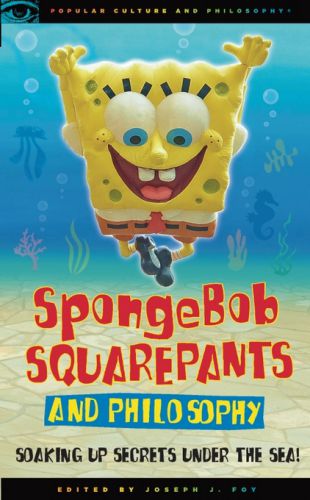
Le 60e numéro de l’intéressante collection Popular Culture and Philosophy® de Open Court Books est probablement un des plus inattendus, puisqu’il célèbre l’ineffable Bob l’Éponge lui-même, placé à la croisée d’une série d’analyses philosophiques sur l’identité, la Gemeinshaft et la Gesellschaft weberiennes, le féminisme, la volonté de pouvoir, le transcendantalisme américain, les paradoxes de l’onirisme cartésien et la pulsion de savoir freudienne…
Respect!
Joseph J. Foy (éd), SpongeBob SquarePants and Philosophy: Soaking Up Secrets Under the Sea! Open Court, 2011, 192 pgs.
«The book begins with a section exploration of the major characters of the series. To begin, Nicole Pramik uses the philosophies of Aristotle to demonstrate why SpongeBob, more than any other character in the series, is defined by a life of well-being and flourishing. In chapter two, Timothy Dunn provides an assessment of SpongeBob’s best friend, Patrick Star, using the writings of J.S. Mill to ask if the life of simple pleasures preferable to the life of the mind, while in chapter three Natasha Liebig uses the German pessimist philosophers to reveal what it means to live the life of Squidward Q. Tentacles. Chapter four uses the competing philosophies of Ayn Rand and Karl Marx to evaluate the actions of SpongeBob’s boss, Mr. Eugene Krabs, while in chapter five Denise Du Vernay explains how Sandy Cheeks offers a brand of feminism that breaks down traditional assumptions about masculine and feminine identity and repackages them into constructive and empowering messages for young people. Concluding this section of the book, Nicholas Michaud uses the philosophy of Friedrich Nietzsche to ask us reconsider our belief that SpongeBob and his friends are somehow heroic by giving us insight into the “will to power” held by the powerful little protozoan, Plankton. Section two of the book is dedicated to exploring the community of Bikini Bottom, starting with Shaun Young’s examination of Bikini Bottom as a representation of various theories of the just state. In chapter eight, Nathan Zook looks into whether we might learn something about theories of democracy and political participation from an election between SpongeBob and Squidward for “Royal Krabby,” while in chapter nine Adam Barkman uses the writings of Dante Alighieri to assess the monarchal rule of King Neptune. Chapter ten uses the legal philosophies of thinkers like Thomas Hobbes, John Locke, John Rawls, and David Hume to answer whether Mr. Krabs has the proper philosophical basis upon which to claim an individual right to possess and profit from the secret Krabby Patty formula. Chapter eleven then takes us to the pristine Jellyfish Fields where Greg Ahrenhoerster uses literary naturalism and the works of transcendentalist thinkers to examine environmental ethics and an individual’s obligations to shared resources. The third and final section uses SpongeBob to explore psychological and scientific questions that float around under the sea. In chapter twelve, Katie Anderson uses the episode “Sleepy Time” to explore Cartesian principles related to the philosophical questions that attempt to distinguish between dreams and reality, and in chapter thirteen Robert Kincaid continues the examination into philosophical issues related to the mind by using SpongeBob, Squidward, and Patrick to relate the theories of Sigmund Freud. Chapter fourteen is dedicated to an introduction into the philosophy of science by Wilson González-Espada, and Robert Vuckovich concludes the volume with an essay on SpongeBob’s insatiable thirst for knowledge in the episode “The Secret Box“.»
Le réalisateur espagnol nous revient en force avec son autopsie malsaine de Luis Tosar en pervers gardien de nos rêves, Mientras Duermes (Malveillance), et la tant attendue continuation de la saga REC, en dyptique avec la préquelle de Plaza déjà annoncée dans ce blogue.
«La peur. Tel est le sujet de ce livre pionnier. Car la panique, le complot, l’angoisse sont autant de fondements de la culture populaire qui, depuis un demi-siècle, façonne les mentalités par-delà les frontières et les barrières linguistiques: J Edgar Hoover et la mafia, le maccarthysme et la peur des Rouges, John F Kennedy et Martin Luther King assassinés, Marilyn “suicidée”, Charles Manson meurtrier de Sharon Tate et du mouvement hippie, les Black Panthers et la culture noire américaine, le Watergate, la chute du Mur, la guerre du Golfe, Ben Laden et le 11 Septembre. Autant d’épisodes constitutifs d’une culture populaire et d’une mentalité. Pop parano évoque une histoire familière et méconnue. En mettant notamment à nu les correspondances entre la paranoïa et la science-fiction, le fantastique, le polar, la littérature, le cinéma, la bande dessinée, le rock, la pop, le rap. La vision du monde de plusieurs générations d’Américains et d’Européens ne peut être comprise sans la prise en compte de cet aspect essentiel de la culture de masse.»